Friday, June 30, 2006

ВПЕЧАТЛЕНИЕ О МИНСКЕ

At the end of 2005, when I opted to come here to Minsk to run a course, little did I know that similar assignments in Zurich, Paris, Palma and Palermo would end up being given to colleagues. I felt I’d drawn the short straw. As I was being driven into the city under an overcast sky, I saw nothing in the endless concrete blocks to change my mind. The Director of the school here told me that the architecture was “Stalin-style” and that people loved the city despite the lack of historic buildings – it was completely flattened at the end of WW2, which is known here as the Great Patriotic War, a period in which every fourth citizen died. I struggled for something cheerful to say about the look of the place, and failed.


I stepped out of the car into a clearing in the forest of tower blocks, like in a scene from Eraserhead. They have patchwork surfaces with damp stains. Between them is untended, overgrown grass and dandelions, criss-crossed by broken paths. My heart sank, and a rook squawked as if to mock my discomfort. I was determined not to show any sign of well-heeled squeamishness at the chipped walls, smelly lift and dark old-fashioned decoration of the flat I was ushered into. But all these things rolled together into one thought: Belarus is grim. Then it rained for three days straight.

This is the land the USSR never left – well, except for a 4-year sniff of freedom in the early ‘90s. Travelling round the city, I feel as if in I’m in a looking-glass alternative reality. This is the world I left a few days ago, but everything is a bit different. Women are sweeping the streets spotlessly clean. There’s a distinct lack of bars, and advertising. Billboards have patriotic propaganda posters. There is no graffiti, except “Eminem” scrawled tentatively in a lift. Service in state-run shops is reluctant at best. And every fourth man – surely it can’t be true – is a policeman. The cops, bastard-looking in those huge circular Soviet caps, are everywhere. They throw their weight around, for example by stopping their cars by jaywalkers and yelling four-(Cyrillic)-letter words at them through loudspeakers.

As a foreigner, you feel that people will suspect you of something, though they turn out to be – mostly – very friendly, apart from one instance where I got abuse from a drunk guy on a tram. (My Russian didn’t allow me to interpret his exact words, thankfully.)

I never mention politics, then discover to my surprise that people do it quite freely. Just like at home in “my” world, everyone hates the President. Here, it’s a crime. Yet people are not completely unhappy with the status quo – they certainly prefer this to being overrun by Russian gangsters. My friend asks me what is the difference, anyway, between Mr Lukashenko wielding his might in this restricted sphere, and Bush & Blair doing it globally. You can watch Euro News and access the internet freely (although there are rumours that the government has approached China about buying technology that would prevent this). In the parliament canteen, apparently, members sit round drinking gallons of vodka before going to provide their rubber stamps. And below the main building are nine subterranean levels…

If there was no sex in the USSR, it’s unstoppable in this remnant of the old Empire. Or maybe it was just me, in the heatwave that began a few days later, feeling all charged up with the sun high, high in June. I just couldn’t help noticing that this city is full of great looking women – everywhere. And I couldn’t help looking at them, squeezed together on the trams, hanging out by the fountains in the park during the long summer evenings, waiting in the marble halls of the metro, click-clacking up and down corridors in their thin high heels – which are de rigeur here. Typically, thery’re dyed blondes in tight white trousers that show everything, or tight denim skirts. I guess it’s enjoyable, and makes a clear break with the past, because the regime hasn’t banned this kind of self-expression. All these women are unavailable, though; it’s in the culture here to get married at 17 or 18, certainly before 25. I was told the women make themselves look stunning so that they can keep their men.

“Why do you eat so many vegetables?” asked one of the pretty adminsirators at the language school as she pored over my salad. “Because they’re good.” Probably getting rid of free radicals and all that. On second thoughts, these ones probably won’t! Since my arrival, I’ve learned that Belarus was the worst affected country following Chernobyl, 20 years ago. A whole area of the southern part is off-limits as far as agricultural produce is concerned, and there are villages where after forced evacuation, only the very old have returned to live out their last years. Tragically, young people who grew up in the affected area develop not-so-mysterious cancers; there are thousands of deaths every year, still. Vegetable stalls can be visited by radiation inspectors, and you normally take your Geiger counter with you if you go to pick mushrooms in the forest. I was told I should cut tomatoes and mushrooms in a special way to remove potentially radioactive bits, and not eat the insides of carrots.

Waking up on another sunny morning, I watched a woman cutting the edges of the green areas in front of my block – she is attentive and keeps at it. She doesn’t look ashamed or impatient. I get the feeling – just sentimental, perhaps - that this kind of work is still valued here, by everyone. Money has not (yet) become the sole arbiter of value, except among the young.

There’s no copyright law. So you can pick up MP3 disks with hundreds of songs for $3 each. One stall-owner found it hard to believe that it would be an offence in the West to sell them, and that the police have the power to get information from ISPs and arrest people for downloading music. “And it’s supposed to be a democracy!” he laughed.

There are more obvious good things about a planned society– everyone has a flat or, at least, each family has access to one or two, which doesn’t amount to the same thing. Maybe people don’t take the same pride in them, but this has its benefits: People do not find endless fascination in talking about property prices and doing up property. There are no makeover shows! There is no homelessness at all, although young couples very often have to live with their parents. Everyone, it seems, has a little dacha in the country that they go to every weekend – rather than going shopping – to dig the allotment and swim in a lake. Babushkas return to the city with bundles of spring onions and other produce to sell on the streets.

Last weekend, I went into the country with a few of my trainees. We visited a rural life museum, which was once a real village, with pre-industrial wooden houses and barns full of old butter churns, sleighs, and handlooms. I’m told things are still like this in some places. I would like to say that I plunged into the lake nearby, but it was actually much more tentative because of the muddy bottom and alien podded underwater reeds to negotiate. Lots of young people were out doing the same thing – and I noticed there were a lot of nice cars parked nearby, and some very expensive-looking dachas being built too. (Formerly, there had been a size-limit.) It won’t be too long before aspirations to conspicuous wealth get the upper hand here, as everywhere else. Meanwhile, it’s been a privilege to have a glimpse of a different way of life.

Saturday, April 22, 2006

EARTH DAY 2006: FUN, AND FUTURE POLITICS

Imagine your city without any cars just for a day, or even an afternoon. This is the idea behind Critical Mass, when thousands of cyclists take to the streets in a carnival atmosphere, and often with scant regard for the rules of the road. My earliest memory of this event was making wide arcs in the middle of Tottenham Court Road in London, reclaiming a street from its usual association with slavish Saturday shopping, for the delighted amazement of childhood. You could hear birds sing and a distant faint rushing sound was the only reminder of cars.

The Budapest Critical Mass is an annual event, which makes it more of a crowd-puller than its London equivalent. Imagine a procession of bikes, almost unbroken for a mile or so on the banks of the Danube on both sides and right across two of the bridges. Policemen bargain with the crowd to keep order and the good-natured participants agree to let a tram pass. Every so often the procession halts and cyclists hold their bikes aloft triumphantly, whooping with unrestrained glee. As we head through the tunnel beneath the castle, it’s almost deafening. It’s the sound of a spontaneous, albeit pre-arranged discovery of ‘people power’, a rare enough thing. People smile easily at each other; some have rigged-up sound systems; people of all ages take part. A toddler in a child’s seat gazes round himself mutely; a dreadlocked adolescent experiments with a series of wheelies. Somehow, everyone manages to respect everyone else’s space, gracefully coordinated like birds in flight.

Close to the end of the route, there’s a Brazilian style drum-out, a well-practised band whose thumping music matches exactly the enthusiasm of the crowd, which must be at least fifty thousand, if not twice that.

There’s no real agenda to Critical Mass. There’s probably a vague green leaning here, but nothing resembles a focussed political programme. And so much the better. The contrast between the joy of today’s crowd and the carefully staged pre-election political rallies of two weeks ago (on behalf of both major parties) is marked. Today was the free expression of the human spirit; the former events the result of manipulation. The electorate are far from apathetic - the politics of the future can emerge from such a self-aware, vibrant and non-institutional movement as Critical Mass.

Sunday, March 19, 2006

How is it possible that this beautiful poem was nowhere to be found online? Let's change that. (Potential update: "pressing button A" would now be scrolling and clicking.)

THE INVADING SPRING - Phoebe Hesketh

Man has fenced the wilderness back in the hills;
Tamed in the town he walks on concrete blocks;
And in the park his heart with pleasure fills -
But not at Wordsworth’s school-book daffodils.
No, his delight is catching up with clocks
And turning knobs and pressing button A -
The train is due; there’s half a minute to go
But the lift’s gone down and the escalator’s slow -
Praise God for the Underground this lark-song day!

Breathing, yet dead, his life is caged with steel -
Wire, wheel, and cable - automatic aids
To living - he exists but cannot feel
The slow barbaric beauty that invades
A world at Spring. He moves in crowds and queues
And reads the Morning Star and the Evening News
But cannot read the sky though April beats
A golden fanfare down the dusty streets
And breathes a green breath through the petrol fumes.


Yet a third-floor room is powerless to deny
The feel of leaves, the pollen-smell behind
New flowered cretonnes where a rebel wind
Is strong and blue with ranging through the sky.
And though the files of his mind are entered up
Like office ledgers, unknowing he holds the cup
Brimmed with the light of moons beyond his reach.
The street is thronged with more than he can know -
The Invisibles who know him; without speech
They call him; without form they come and go
And catch him by the sleeve until the slow
Unwilling flesh is beckoned from its task.
Released, he finds the vital stream that spills
A primrose light on sullen window-sills.
THOUGHT FOR SPRING

"Through this estate runs a stream. It is not quiet water running peacefully to the big river, but a noisy cheerful stream. All this country around here is hilly, the stream has many a fall and at one place there are three falls of different depths. The higher one makes the noise, the loudest; the other two are on a minor key. All these three falls are spaced differently, and so there is a continuous movement of sound. You have to listen to hear the music. It’s an orchestra playing among the orchards, in the open skies, but the music is there. You have to search it out, you have to listen, you have to be with the flowing waters to hear its music. You must be the whole to hear it – the skies, the earth, the soaring trees, the green fields and the running waters, then only you hear it.

But all this is too much trouble; you buy a ticket and sit in a hall, surrounded by people, and the orchestra plays or someone sings. They do all the work for you; someone composes the song, the music, another plays or sings, and you pay to listen. Everything in life, except for a few things is second-, third-, or fourth-hand: the Gods, poems, politics, music. So our life is empty. Being empty we try to fill it – with music, with Gods, with forms of escape, and the very filling is the emptying. But beauty is not to be bought. So few want beauty and goodness, and man is satisfied with second-hand things. To throw it all off is the real and only revolution, and then only is there the creativeness of reality."

J Krishnamurti, Letters to a Young Friend

Saturday, March 04, 2006

BLAIR'S TRAGEDY

Why has Tony Blair acted as he has over Iraq? I have little concrete evidence for what I write here - it's what I can glean from the facts, as we now know them, and the character of Mr Blair, as far as we can discern any consistency in it.

You can only understand Blair's actions if you understand that people, all people, have "mixed motives". His priority was to do the best thing for Britain in the long term - it was probably a matter of personal vanity too since he knows that history will judge him in terms of the long-term consequences of his decisions; in the end, can we be sure? Don't we often present slightly selfish decisions to others, and even to ourselves, in a favourable light? It's the essence of 'spin', and that's been at the heart of this administration from the beginning. Let's hope God accepts the spun version!

What is clear, and public, is that he decided to adhere to the so-called 'special relationship', in doing so following a consistent strand in UK foreign policy. He thought that the best idea would be to be on the side of the most powerful player in the apparently dangerous new world situation and at the same time to use this, as he thought, perhaps naively, to exert leverage on Bush to reopen negotiations in the Middle East. This decision, in principle to support an invasion of Iraq, was taken days after 9/11, we now know. Blair almost certainly thought long and hard about it, consulted his conscience in the little time he had (hours? days?) then committed. He also seems to have made some effort to bargain at this point and at various other stages along the road to war, though it's clear he had very little influence over the US. After that initial commitment, there was no return - he has had to be disingenuous, and actually to lie, in order to make things happen the way the US wanted. This inconvenience occurred because the UK Parliament has to agree to a war, and we still have our own foreign policy. A more honourable man would have resigned.

A real opportunity for global dialogue post 9/11 was thrown away, there have been thousands of deaths, and the situation in Iraq is a disaster. It may have been better to follow the EU line, as many people advised at the time. All this is debatable, and beside the point here. The point is that anyone who thinks this sits easily with Blair's conscience misreads the man.

He will not be forgiven for not talking to war victims' families. Of course, he would have to tell them that he was prepared to throw away their loved ones' lives to help maintain an important alliance, and probably he should be prepared to do so. It's the least he owes them, though the scenes of confrontation would be simply heartbreaking for all concerned. As for what it has done in terms of tarnishing his political reputation, destroying his popularity, and ruining his ambitions for achieving a more just social settlement in Britain, this is Blair's personal tragedy, a fate which should not be enviable in anyone's eyes, despite his material comforts. These are things that probably keep him awake at night, things that cannot be shared with Michael Parkinson, or with anyone apart from his closest friends for years to come.

Trying to make good decisions as PM, let alone ones that you can also square with your conscience, can't be easy. Blair's belief about God's judging him is sincere, but someone should have told him a long time ago that politics and religion do not, cannot, mix. It should be obvious that someone of a genuinely religious persuasion (i.e. who wants to live according to Christian or any ethical precepts) ought not to be doing a job that requires many decisions to be taken according to utterly different principles. It is these, rather than his religious faith, that Blair has followed to the best of his judgement and history may yet absolve him, as it usually does with realpolitik, as we move into an era defined by political instability and an uncertain oil supply.
GUITAR LOSS

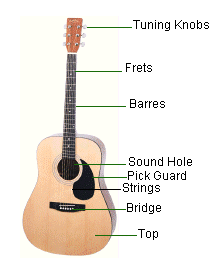
I've been picking up my guitar a bit more lately, and half-heartedly playing some OK cover versions with friends, though what I/we should really be doing is writing writing writing new material. Anyway, in order to kick-start some inspiration, got a lesson from a colleague here who's a kind of latter-day Django Reinhardt, and a bit of a musicologist to boot. So far so good. I picked up my guitar today to restring it, with the idea of practising some of the new chord shapes and bang! The bridge just came off and was hanging there forlornly. I surprised myself that I didn't shout or swear but took the impact very calmly.

I'm very attached to this L'Arrivee guitar - it's the first thing I ever saved up for and I've been playing it for over 13 years. Wrote some good songs on it too, mostly a long time ago, it has to be said. But for it to be broken was a wrench! The 'damage' looks superficial, however - the bridge was just glued on to begin with, so all that's called for is a bit of superglue, right?

I rushed it down to the music shop as soon as I could but when I produced the instrument, the guy there informed me (with a lot of grimacing and sighing) that it should never have been strung with steel strings in the first place! He thinks it's designed to be a nylon-strung instrument, lacking some kind of metal bar reinforcing the neck. I just don't get it - if that's the case, why has it worked so well up till now? Why is it obviously a steel-string design? I've been frantically trying to picture how a metal bar would make any change to the pressure on the bridge (as opposed to the neck) anyway. The neck has shown no signs of strain. Anyway, it's an uneasy wait till Tuesday to see if I can get a second opinion. And the first time I've been without a guitar around the house for years. Maybe I should give it all up as a bad job - it's been fun, at times almost compulsive, but has brought me almost as much pain (in terms of non-recognition) as joy (in creation).

Afterthought: Supergrass just released another well-crafted album at the end of last year. As usual, it sank without trace. These guys, a kind of latter-day ELO, have good melodies and arrangements just pouring out of them. Is it time for an Arts Council subsidy?

Wednesday, February 22, 2006

THE REAL HEART OF DARKNESS - 2


(Where are the Praetorian Guard when we need them?)

You should never blame people for their country's foreign policy, but I remember at University in the 1980s asking a American student indignantly why the hell the US had bombed Libya. His reply: "because we can", before launching into a lot of anti-Arab humour. He was one of those smart people who don't take anything seriously.

It's a truism that power corrupts, and absolute power corrupts absolutely. I'm becoming persuaded by the idea that this is a kind of Law of (Human) Nature. It operates in every sphere: personal, financial, professional, political. Not that there aren't exceptions - we all know them. But, in general, the amount that people act on principle is in inverse proportion to the range of opportunities open to them. The morality we were raised on, itself a veiled system of social (in this case parental) control, loses its hold as we flex our muscles a bit. Of course this is Nietzsche's Will To Power.

Who are the passionate believers in social justice, out campaigning, going to political meetings in the rain, and handing out leaflets? Committed idealists are usually young, dispossessed, property-less. It's no accident that middle age is full of compromises - they go hand in hand with the accumulation of wealth. What was it hippies used to say - "Don't trust anyone over 30"? And whatever their replies, when powerful people are pressed by journalists about their motives, the real reason is almost always "because I can".

Saturday, February 18, 2006

SPRING, EPISODE 1: IN THE SKY

Today, I emerged from the stuffy interior of my thoughts into a bright morning. The pavements were no longer gleaming and their heaps of hardened snow had lost their rockiness, full of holes and the crystals merging and turning into big drops. The breeze was unmistakably mild. Rounding the corner to the riverside tram stop, I was surprised by warm sun on my face. An incomparable moment: nothing prepares us for the first touch of Spring, and none of the things we normally hanker after is half as good. On the tram, I looked out at the unfamiliar light reflected by the rooftops and steeples.


I’ve always thought of roofs, and specifically chimneypots, against a sunny sky, as one of the best images of freedom. You never look at them if you’ve got to be somewhere in a hurry. Like in a Magritte painting, the effect lies in the contrast between the perfectly mundane architecture and the blue infinity beyond.
FOOL, n.

A person who pervades the domain of intellectual speculation and diffuses himself through loading up on heaps of junk from a series of adjacent retail outlets, and compulsive downloading. He is omnific, omniform, omniject, omnicidal and oblivious. He it was who invented clubs, hierarchies, contracts, the steam iron, pop-up advertising, the annual appraisal, the mullet, snakebite, and mobile phone jewellery. He created patriotism and taught the nations marching – then devised,“flagged up” and “actioned” political economy, management theory, fatwas, postmodernism, corporate training, consultancy (medical specialists excepted) and Las Vegas. He established totalitarianism and democracy, left-wing versus right-wing, the “third way”, and centre-partings. He is from everlasting to everlasting – such as creation’s dawn beheld he fooleth now. In the morning of time he sang upon primitive hills, and in the noonday of existence headed the sitcom of being. His myopic gaze falters as the rolling credits of civilisation blur and fade to grey, and he steals a furtive peep at a random cleavage. And after the rest of us shall have retired for the night of eternal oblivion he will sit up to compile a Top 100 goals of all time. (adapted)

POLITICS, n.

A strife of interests masquerading as a contest of principles. The conduct of public affairs for private advantage.

From The Devil’s Dictionary by Ambrose Bierce

Thursday, February 16, 2006

DOING THAT SCRAPYARD THING


Got the following email from a good friend of mine, who works for a big car magazine. Shows just how messed-up autophiles can be. (This description, with its overtones of, well, self-love, fits nicely.)

"...in return for my soul?

Usually I enjoy editing our letters page. This month, we have one guy who loves himself and his Porsche so much he thinks he can see the'hope, warmth and happiness' in people's eyes when they just look at his car.

We have another guy who tells his wife she should be thankful he spends so much time with his cars, because he could be in a hotel room with his niece instead.

And another guy who blames environmentalists for the decreasing number of lovely, wonderful scrapyards.

I'm doing my bit for the world... by changing 'niece' to mistress."

Sunday, February 12, 2006

HOW TO BECOME HIP WITHOUT REALLY TRYING


“Went out to the hazel wood,
Because a fire was in my head … “

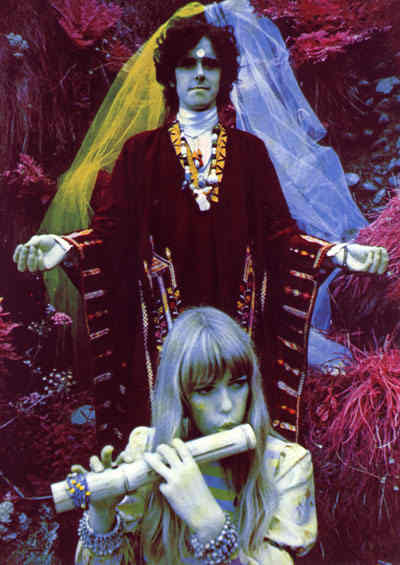
I first heard these lines about a year ago, sung in a high-pitched shaky voice to a spooky, almost monotone tune, and with a chorus of dust and scratches in the background. It was such an otherworldly sound, it stopped me in my tracks. My painstaking researches (click, click, click) revealed that they were from a WB Yeats poem set to music by Dave Van Ronk (early Dylan era New York folkie).

“And when white moths were on the wing,
And moth-like stars were flickering out …”

I stumbled across the MP3 by accident, hunting down the Donovan version from Jon Savage’s Donovan recommendations in MOJO magazine. The details are important – it seemed to me that, musically speaking, this could be the least hip thing you could possibly be up to in early 2005. But I’ve always loved Donovan despite his “hippy-dippy” reputation, and this kind of pursuit is painless in the privacy of your own home, as opposed to over the counter at HMV, where it’s potentially hazardous.

“But something rustled on the floor,
And someone called me by my name:
It had become a glimmering girl
With apple blossom in her hair…”

Around the same time last year, I discovered internet radio and Brindle sat me down to listen to Radio 1’s dance/ambient/acoustic/dub show, The Blue Room. It was the first time I’d heard Radio 1 since 1991 (when I decided it was just no good to wake up to someone, anyone shouting inanities at you, even if the music had been good, which it generally wasn’t). It goes out at 5.30am at the weekend and is aimed at people stumbling home from clubs, coming down from various psychedelics. The choice of music is inspired and unpredictable – I can deal with the odd bit of machine-grinding techno because I know there will be something great in a few minutes. I’ve been introduced to El Perro Del Mar, Hot Chip, TV On The Radio, The Ralfe Band, The New Young Pony Club, The American Analogue Set, and loads besides. (A couple of years ago I’d have been hard-pressed to name any but the best known bands.) Besides which, Rob da Bank is a really affable and non-shouty DJ. It’s just what music radio should be.

In yesterday’s show, he also included The Beatles, a reworking of a song from The Wicker Man, and… Wandering Aengus by Donovan.

“And walk among long dappled grass,
And pluck till time and times are done,
The silver apples of the moon,
The golden apples of the sun.”

Sunday, February 05, 2006

SPOILING FOR A FIGHT


When I lived in Ghana and was the chairman of the campus debating society, I organized a debate on the motion, “religion is the opium of the people” and spoke in favour, with some relish. For various reasons, mostly frustration that the European Enlightenment had failed to make any inroads into their society, I wanted to give my students a nudge in the direction of atheism, or at least skepticism. My intensely devout Christian and Muslim students viewed me as an eccentric “free-thinker” and, thankfully, did not take offence. One of them even volunteered to second me! The debate passed off without incident. I was judged the winner (by a panel, not a show of hands); this was actually a foregone conclusion, as I was one of the masters.

It’s the same impulse to shove believers into modernity that causes Matthew Parris to write (in yesterday’s Times) in defence of publishing the cartoons of Mohammed:

‘But let us not duck what that “I do not believe” really means. It means I do not believe that there is one God, Allah, or that Muhammad is His Prophet. It means I do not believe that Jesus is the way, the truth and the life, or that no man cometh to the Father except by Him. I do not believe that the Jews are God’s Chosen People, or subject to any duties different from the rest of us. It means I do not believe any living creature will be reincarnated in another life.

In my opinion these views are profoundly mistaken, and those who subscribe to them are under a serious misapprehension on a most important matter. Not only are their views not true for me: they are not true for them. They are not true for anyone. They are wrong.’

Let us assume for the sake of argument that matters of religion do in fact fall into the falsifiable-by-science category (see ‘Who Lives in a Postmodern World?’ below), and therefore can be demonstrably wrong. What grounds are there for showing a deluded believer the error of his ways? Might there be any factors that would hold us back from so doing?

As far as I can see, in the case of the cartoons, there were no good grounds to publish. They are NOT going to help shift the balance of power in oppressive societies. Besides which, they may well incite religious hatred; the one with Mohammed sporting a bomb doesn’t look too dissimilar to me from the anti-Jewish cartoons in 1930s Germany. While upholding the freedom of the press to publish, we should recognize that to do so was a pretty poor decision all-round.
It looks rather like a piece of playground provocation – picking a fight. And the result has been perfectly intelligent journalists and crowds of Muslims on the street just spoiling for one – in their own different ways. It’s so exciting, isn’t it, this impending “clash of civilizations”? It’s something to talk about and it’ll sell a lot of papers, to be sure. But where are the peacemakers now? In the face of the disintegrating order, where’s Piggy to wail impotently about people “acting like a crowd of kids?”

While recognizing that satire is a powerful weapon in deflating pomposity and chipping away at the armour of authoritarian regimes, we should use our freedom to criticise people judiciously. After all, I am free to tell my overweight friend that he’s eaten all the pies. Just as I am free to discuss how diverting pornography is with my feminist colleague. I am free to tell an advertising consultant I meet at some party that he’s in an evil trade, or a committed Robbie Williams fan that his idol is a media-manufactured talentless chimp. Many of my closest friends believe passionately in astrology and I am of course free to trash their beliefs mercilessly. You get the picture. The thing is, I choose when to say these things, and often hold my tongue. It’s not hard; it’s the usual process of seeking not to give offence. It’s valued only a little and so easily scorned, but behaving respectfully is not merely a social nicety; in Ghana, and in our modern multicultural European societies, it can prevent bloodshed.

I now regret having held that debate in Ghana, and sincerely hope that I was not the catalyst in bringing anyone to give up their opium habit. I now see clearly that it was a society in a different stage of development. Belief in Providence and in the afterlife gave people a practical reason to hope, to get up in the morning and plough their fields, to strive to better their lives, to smile. And generally people in Ghana, barring personal tragedies, were happy and fulfilled, with some belief that things were going to get better for them. How could skepticism possibly improve this? It was a clear case where happiness, albeit opiated, was better than “the truth”.

  • Simon Jenkins: These cartoons don't defend free speech; they threaten it
  • Sunday, January 29, 2006

    Life hangs by a thread, but while it's still dangling there, and at the risk of sounding pious:

    REASONS TO BE CHEERFUL

    Principally, friends. With the powers available to us through language, we can express our reactions to the world in a way that others can understand and respond to. Over a period of years. To me, nothing compares with this hum of sympathetic communication between two spirits.

    A (temporarily, but long-term) fully operational multi-sense mechanism, worth more than any amount of money. If we had to rent or buy this apparatus, it'd be priced at least as much as a house, and probably more.

    Light, the sky, clouds, season change.

    Piping hot water that gushes out of a showerhead, even though it’s the depth of winter. (What was life like before? What's it like now for street-sleepers? As well as sparing some change, you have to imaginatively enter into that bitterly cold world to appreciate just how great it is to wake up and have a hot shower.)

    The availability of a huge variety of food from all round the world only a few minutes’ walk away from where you live. Including fresh fruit juice all year round: another reason to get out of bed.

    Free downloads, blogs, and the whole circus of the internet at your fingertips.

    Books, books, books to lose yourself in.

    All the years left to experience these things.

    This might just sound smug. Of course I realise the impossibly large numbers of people who do not have access to some, or all, of these things. If thinking about that prevents you from enjoying your own life, you have the privilege to go out and do something about it.

    Life's beautiful. If Nietzsche's little eternal recurrence devil came to me, I'd say "Yes - every moment again!"

    Saturday, January 28, 2006

    MANNERS

    The other day, I was standing waiting for my bus to depart in a morning daze. Two teenage boys were standing next to me, on their way to school. They must have been about 14 or 15. Their friend saw them from the street and also stepped on, said “servusz” (hi) while pulling off his mitten and offering his hand. The others did the same, and it was handshakes all round. I was taken aback at this show of calm, mature camaraderie. Was it some kind of ritual they’d evolved in their group? Surely, even in Hungary, teenage boys must jostle each other and say things like “How’s it going, dickhead?” In Scotland, we used to call each other names as a bonding device. The whole basis of my experience of friendship in adolescence was learning that a good slagging meant the other person really cared. Anyway, in terms of manners, this is evidence that Hungary hasn’t really caught up with the 21st Century world.

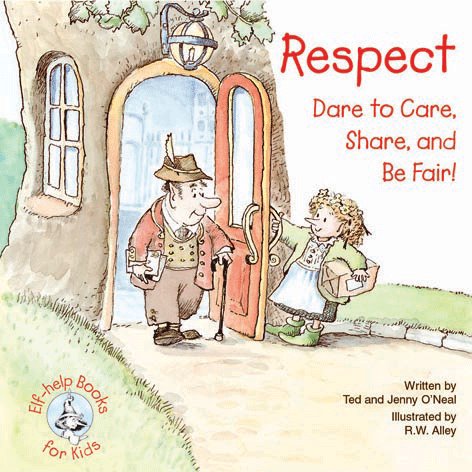
    RESPECT


    Laughably, Tony Blair seems to think he can legislate to bring back “respect” among the young. While transferring the burden of proof on to people suspected of committing petty crimes may well be a good idea, no amount of sticks, carrots or political speeches will make the slightest difference in promoting a real culture of respect for others while every micro-message pouring out of the entertainment media exhorts contempt for authority, pure individualism, success at any price – all the modern virtues.

    There are two kinds of respect: the philosophical theory and the everyday practical kind demanded by your elders and betters, or some guy pointing a gun at you in a gang fight. “Respect”. Born of fear.

    The first, respect for human beings merely by virtue of their being human was always more an aspiration than a reality, a supremely admirable enlightenment project that was dead in the water by the time Nietzsche had finished with it, though echoes of it are still heard from time to time in well-intentioned international proclamations from the Charter of Human Rights to the G8 summit. Meanwhile, corporations and the militaristic junta in command of US foreign policy continue to wreak havoc regardless, aided and abetted by guess who?

    A government with any guts would commit to this philosophy of mutual respect. For example, by facing up collectively to the impending ecological disaster and helping to inculcate a new value system based on environmental responsibility. That would demonstrate, and probably command, respect. It’s not going to happen. Standing up for human rights against international capitalism and its enslavement of millions in the developing world. That might promote a culture of respect. It’s not going to happen. Standing up for the dispossessed against greedy landlords extorting people’s wages from them would show a commitment to a “respect agenda”! But, surprise surprise, that’s not on this agenda either.

    It’s the other watered-down kind of “respect” that Blair & co are now promoting, something that shouldn't involve too many difficult decisions! It was shown by most schoolchildren to their parents, teachers and to policemen in the post-war years, and went into irreversible decline after the advent of the Rolling Stones. So the story goes. Now, I know nothing of the mysteries of parenting, but I do know something about teaching. If you want to get respect from a class of kids in September, you have to first make sure they’re a bit afraid of you, then you have to build up a relationship with them by showing an interest in them, and showing that you’re even-handed in the way that you distribute attention, rewards and punishments. Since the fear factor is no longer present in our schools, teachers are going to have to work all the harder to earn respect. And they do. (This will not have been helped by the inexplicable decision by some irresponsible official at OFSTED to write to schoolchildren at a failing school, over the heads of their teachers, telling them that the teachers “could do better”!)

    Outside the school gates, it is futile to try and reinstate some version of old-fashioned values without the fear factor, and Blair knows it. Society has changed irrevocably and, it’s true, we don’t “know our place”. (Wouldn’t it be great for politicians if we did?) So it’s fitting that he has chosen as the principal weapon in this campaign the one thing that can really motivate people, the only thing that still counts: a fine! In doing so, he reveals the bankruptcy of ideas at the heart of government, and of a socio-economic system that’s on its last shaky legs. If financial incentives are the only social glue left, the minute there is less money sloshing round the economy (in the next oil crisis, say) there is going to be some very bad behaviour indeed.

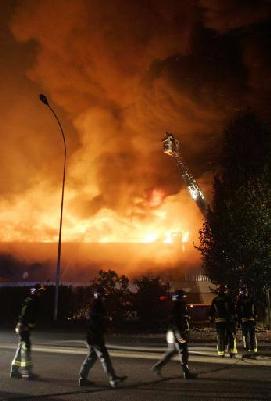
    Pictured: scene from the Paris riots, 2005

    Thursday, January 26, 2006

    ICE MENAGERIE

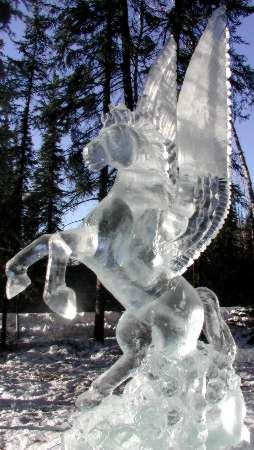
    It's minus 15 now in Budapest, or thereabouts. I've been dogged by a cold which found it hard to develop fully in the stew of Vitamin pills and echinacea that's my January blood, and then exploded for a day. Every morning I get into my thermals to go to work. (And quick change out of them as soon as I arrive in the overheated interiors.) The sky is clear and there's always some trick of the morning light that makes the Parliament building pink or peach-coloured. No matter how much of a hurry I'm in, I try to walk the slightly longer but far more scenic river way and watch the cloudpour of vapour from all the heating systems. From the tram today, I caught a glimpse of the ice sculptures for a second time. They're giant versions of the kind of glass animals that might grace some old lady's mantelpiece. They remind me of the plastic ones I collected in a tub when I was a child. They're kitsch, I know - I can tell from a distance. The mammoth, the hummingbird, the gryphon are all a bit cute. But they're ice. And the coloured lights shining through them from behind, playing on the edges, make them look as if they've got Christmas tree lights inside. I make a mental note - which becomes a physical note - to return later.

    When I do, after a good day when I could feel the cold retreat, the animals are surrounded by people and digital cameras. They're illuminated. The lights look as if they're coming from the inside. They pick out patches of haze and some thick veins in the crystalline structure of the ice. Small children wander round, dying to touch, but too well behaved. Would their hands stick to them, perhaps? Nightlit, the creatures are redeemed from their kitschiness - a parade of ambassadors from the ice kingdom - fantastic, rough-hewn, gleaming, perfect.

  • Ice Art: the artist's site


  • Saturday, January 21, 2006

    WHO LIVES IN A POSTMODERN WORLD?


    I'm writing this following the recent debate on Puskas's blog (see sidebar) on truth v happiness, and the nature of truth.

    I've always been curious about postmodernism, and never quite grasped what it is, probably because there's nothing concrete to grasp. It mostly to do with fragmentation, perspectivism and flux: the intellectual result of millions of trans-cultural interactions on a global scale. The most lucid explanation of postmodernism I've read is towards the end of Richard Tarnas's The Passion of the Western Mind. His style involves endless reformulation of the same idea, which, in the case of such an elusive phenomenon as this one, proves incredibly useful.

    Here are some extracts:

    "The mind is not the passive reflector of an external world and its intrinsic order, but is active and creative in the process of perception and cognition." "There is no empirical 'fact' that is not already theory-laden." These ideas seem to me to be uncontroversial.

    What follows, however, is a real bombshell: "Reality is in some sense constructed by the mind, not simply perceived by it, and many such constructions are possible, none necessarily sovereign." "All human understanding is interpretation, and no interpretation is final." "Every object of knowledge is already part of a preinterpreted context, and beyond that are only other preinterpreted contexts. All human knowledge is mediated by signs and symbols of uncertain provenance, constituted by historically and culturally variable predispositions... Hence the nature of truth and reality, in science no less than in philosophy, religion, or art, is radically ambiguous." (italics mine) You get the idea. And through this chink in the city wall of Scientopolis marches the whole magical, mystical New Age carnival parade - beliefs become a kind of lifestyle choice, and no longer have to submit to the rigour of scientific testing. Why should they? They are all equally valid. There are no meta-narratives.

    Is the (clearly stunning) success of science in predicting everyday occurrences the only philosophical reply to this radical perspectivism? This is a genuine question. Could the success of science be merely a huge coincidence, and end tomorrow?

    Saturday, December 24, 2005

    MOMENTS IN AMBER - 2005

    Grayson Perry suggested in the Times that rather then getting pissed on Hogmanay, we should go over personal lists of the highlights of the previous year. So here's mine - early - so I can drink to my heart's content too.

    This was the year where I, first and foremost, learned to be an EFL teacher trainer. I've certainly expended more energy on this than anything else, so I'd have to - reluctantly - say that it's been my greatest achievement. Reluctantly because it doesn't sound very exciting or exceptional. The main thing I do is watch the trainees' lessons, which range from the inspired to the completely inept, but mostly at the lower end of that continuum, and lead discussion on their performances in such a way that trainees (a)learn "experientially" from my prompts and (b) will not break down in tears. Watching bad lessons can be grindingly tedious, but I enjoy managing the interactions of the feedback process, which is a fast-moving problem-solving game when it's good. Emotionally, on the other hand, it is often less the roller-coaster ride of the cliche and more like being in the hands of a first-time driver who stalls and lurches forward at every turn because of his unfamiliarity with the controls. The thing is, I'm largely responsible for that, and if I get things wrong I have to try not to dwell on them in the early hours.

    I'll also remember 2005 for free music downloads, thanks to Limewire and the guy behind Bit Torrent. For someone whose main activity in early adolescence (apart from vigorous masturbation, obviously) was taping stuff from the radio, it's a great thrill to have this repeated in mid-life; free music, that is. Having spent years amassing musicalised plastic in various forms and at great cost, I can now act immediately on every recommendation I get - at no cost. Yes, it's a time-waster but I don't care; it's hard to describe the quiet thrill of being able to give an informed opinion on more current bands than at any time since the '95-96 Britpop era. My tastes are still somewhat rooted in the - distant - past, though! It was great that Paul McCartney finally made a good album this year. Contenders for album of the year are Supergrass Road to Rouen, The Engineers self-titled debut, the Boards of Canada and Sigur Ros Takk. But the one that really got me, because of its energy and pretty innovative take on heavy blues was Robert Plant's Mighty Rearranger. My track of the year was the superbly constructed, beautifully sung King of the Mountain by Kate Bush. Loved the ska mid-section.

    It's hard to say that having broadband radically decreased the time spent reading this year. I hope this is only temporary! Anyway, the book I enjoyed most was Richard Tarnas's Passion of the Western Mind, which I decided to re-read after a colleague reminded me how good it is. It's a one-volume history of (Western) ideas which is always engaging, even though you already know the plot.

    Man of the year was Russell T Davies for braving what could have been a critical panning, and managing to resuscitate Doctor Who, my childhood hero, after 15 years in cryogenic suspension in a time-capsule somewhere. Now with added depth, the new series was a triumph: frightening when it needed to be with clever scripts, it reminded me how good TV drama can be. The best film I saw in the cinema this year was Hotel Rwanda. I'll never forget the eerie "cockroaches" broadcasts from the Hutu radio station, and the moment when the UN had to pull out. It made real what had been a very remote, poorly understood news item while it was happening. (I hadn't lived in Africa then.) I also loved The Quiet American, with Michael Caine.

    My most memorable journey of the year was to Krakow during an early, and still near-freezing, Easter holiday. Seeing the beauty of the Medieval market square and eating like kings at the traditional "peasant fare" restaurant were highlights. Auschwitz was what will remain in my memory most - though this isn't the post to elaborate on my reaction to being there.

    The best new person I met is Brindle Cat. There's something in the warmth of her smile and the brightness of her enthusiasm for life that is always new every time it comes out, like a sunny day. She's full of crazy ideas and off-beat writing. She's not weighed down by things. Her intense shyness has started to blossom into a quiet confidence, though she's only starting to know it. I want to talk to her more.

    One morning in September, I went with her to the hairdresser and she explained in Hungarian that I wanted that kind of up-to-date 70s mullet everyone has. It didn't work. When it was finished, I felt as if I had a strange mammal crouching on my scalp and that, naturally, eveyone was looking at me trying to suppress giggles. Judit had disappeared into the back shop; I thought she'd left - with my coat, and money in it. So, after frantically apologising that I wasn't actually able to pay for the awful haircut, I ran home, praying I wouldn't meet anyone I knew on the way. Of course I did - a work colleague who involved me in conversation. Well, I guess I have a kind of sheltered existence: that was perhaps my worst moment of the year. The other was being set upon and mauled by a vicious neo-Nazi called Moody Lawless on a Nietzsche forum. I (naively?) expected to find philosophers there, but got mostly thugs, albeit articulate ones. A virtual attack leaves the same dull, sick feeling as real-life violence.

    Finally, the three best moments of 2005. Ex-colleague and friend Martin heard our Floydian "epic" Kusum (finally completed in 2005), and not knowing who it was, went home and Googled our band Slow Design as he liked it so much. You never get that reaction from jaded record company people or from friends who know it's "just you" rather than some mystique-bound other who's made it. So thanks, Martin! You helped make my year.

    Watching Roy Harper play three gigs in Clonalkilty, Cork was a highlight of the summer. There's a unique character to Roy's songwriting and performance. Despite his being, in his own words, "a greybeard", his singing somehow reconnects me to my inspiration for music and for life. I can't explain why, it just is.

    Most of all, I'll remember cycling down the broad sweep of the Danube on a hot cloudless day in July from Zebegeny towards Budapest. The cycle path is nearly all downhill, and speeds you past views of round tree-covered hills and bright little towns with dovecotes on the roofs and onion-domed churches. Surrounded by pale blue flowers and the not-quite flooded river lapping the banks so close to the path that at times it felt like being in a mangrove swamp, tree trunks steeped in water. (On my Walkman, I was listening to Nick Cave from the 2004 double album singing something about a Nature Boy, and loud.) Life doesn't get any better.

    Favourite purchase, then: my metallic-grey/blue bike!

    Happy Christmas to my very few readers. Expect more intermittent bursts of text in 2006.

    Thursday, December 08, 2005

    BEATLE CRITICISM

    From today's BBC website, a really perceptive comment. I had to reprint it here:

    "Paul connected John with a long tradition of pop music - jazz, standards, showtunes, and more - which became a kind of shoreline; as long as John could see the shore, his experiments had a context and focus. You see this most perfectly expressed in the double-A side Penny Lane/Strawberry Fields. Paul's side is an elegant, stately, classic full of heart; John's is a cryptic, beguiling journey into an estranged world. But it's a measure of their influence on one another that you swap those labels around. Paul's lyrics have a niggling strangeness while John's tune has a persistent melodic charm that places the song in our heads. John absorbed immediate traditions and produced work in the direct shadow of that influence.This was often extraordinary - the Dylan influence that he allowed to show more and more in his voice and lyrics, the LSD imagery throughout his work in 1966 and 1967, the more direct engagement with politics and the counter-culture between 1968 and 1973. He became someone who reported on what he heard, with a deliberate avoidance of reflection, just a trust to his immense talents.

    Paul always mediates, works contemporary influences into his innate sense of the whole tradition. Sometimes this can make Paul seem rather studied, pastiche-y (Honey Pie, Rocky Racoon) but sometimes John's experiments misfire by seeming to show contempt for his artform in the rush to commentary (Power To The People, most of Sometime In New York City). While the causes he often espoused were righteous ones and he supported several groups and figures at considerable risk to himself, he had a dilettante political commitment.

    Once John severed the connection with Paul his work was initially exhilarating, ultimately wayward and unfocused. He drifted from the shore. Ironically but inevitably, Paul and John's solo work is at its best when each resembles to other most closely.
    Paul's work is finest when it's most connected to a rock 'n' roll tradition, or when he allows surrealism into his songs, or a roughness creeps into the production. John's work is often at its most compelling when warm and melodic, and when he takes a step back from his sometimes vacuous political stances.

    His legacy is in his person as much as his songs - in that his songs are so plainly personal." by Simon Fisher (c) BBC 2005

    Wednesday, December 07, 2005

    JOHN ONO LENNON (1940-1980)


    A lot has been said and written this week about John Lennon and his music. Some of it is overblown, of course; he has been marketed as a twentieth century icon, something he'd have found really irritating. Currently it's trendy to say that he was hugely over-rated and a mediocre talent. This is rubbish!

    His music has staying power. It's not to do with talent on an instrument or as a vocalist, but with being truly seminal. Nearly forty years after his best work, his singing is still imitated in so much guitar-driven indie music - Liam Gallagher's nasal snarl is the most obvious example. Songs like Tomorrow Never Knows, I Am The Walrus, Strawberry Fields, A Day in the Life, Cold Turkey and even Revolution were all, when they first appeared, utterly non-derivative and memorable experiments in sound which redefined the boundaries of pop music. Whatever Lennon's flaws as a human being - he had the narcissism characteristic of a lot of artists - these still startling songs deserve their impact on the culture. The less well-known Revolution no. 9 remains probably, as pointed out by Ian Macdonald in the definitive Beatles book Revolution in the Head, the most widely distributed piece of avant garde art on the planet.

    In other songs, he pioneered the genuinely, sometimes painfully, introspective lyric, subject matter hitherto reserved for poetry - and jazz, of course. While Dylan laid claim to the first surreal pop lyrics, you never got such a show of soul from him. Personal experience became one of the standard subjects a pop song, but it's easily forgotten that, before Lennon, pop music was nothing more than a distraction. Kurt Cobain in the 1990s acknowledged Lennon as his biggest influence.

    Lennon's bold originality was rare at the time, and is even more so today.

    Saturday, December 03, 2005

    "PUBLIC SERVANTS"

    From today's Times: "The leaders of the Labour and Conservative parliamentary parties have buried their political differences to join forces for the first time to demand a 22 per cent pay rise for MPs next year.

    The chairmen of the Tory and Labour backbench committes held an unprecedented joint meeting to push for a £13,000 annual salary increase... The MPs, whose salary is £59,095, are also demanding, in addition to the inflation-busting pay increase, an improved petrol allowance."

    Conservative MP Anthony Steen has said: "One of the reasons the Commons lacks quality MPs is because the pay is not enough to attract the best people." (italics mine)

    No comment necessary! Except that I'd like to apologise to the pig pictured in case I have in any way besmirched his reputation.